Revenue Operations: Align Marketing, Sales, and Reporting
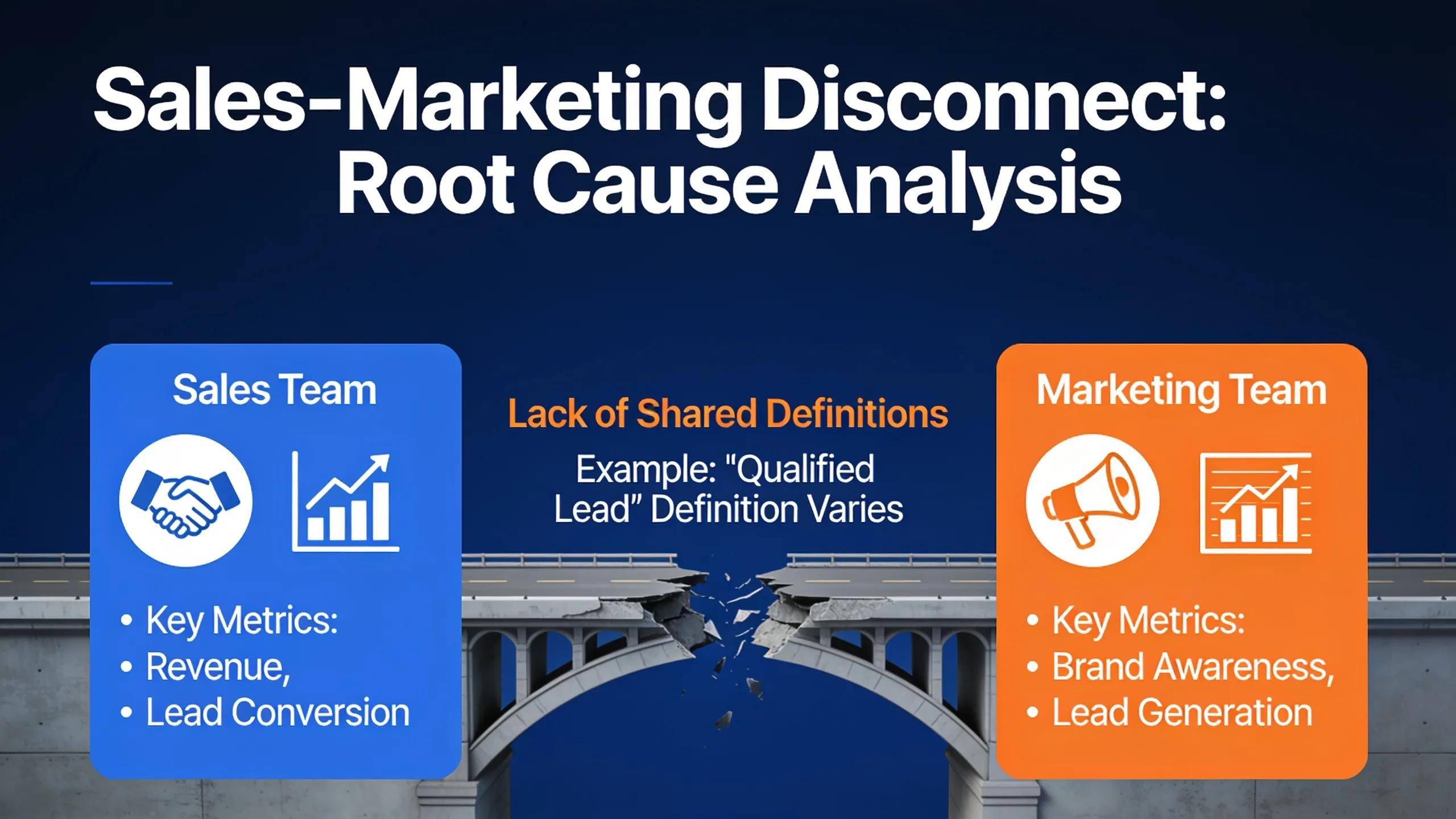
The disconnect between sales and marketing typically stems from a lack of shared definitions
Revenue operations can succeed when search visibility, paid demand, content, CRM, and automation are effectively integrated, regardless of the number of systems, rather than left as separate vendor logins. Bizynk builds this alignment directly into its growth model, unifying marketing and sales data under a single re
Key Takeaways

- Misaligned sales and marketing teams create revenue friction; shared lead qualification definitions eliminate this disconnect immediately.
- RevOps unifies search, ads, content, CRM, and reporting into one system, eliminating the 15-vendor complexity most businesses face.
- Continuous monitoring and automated response (not manual alerts) keeps marketing systems moving and capturing opportunities 24/7.
- Integration of lead capture, qualification, follow-up, and pipeline automation turns traffic into booked appointments without manual handoffs.
What is revenue operations and why does it matter?
Revenue operations is the strategic coordination of goals, processes, and communication between sales and marketing to drive revenue and improve customer experience. This discipline replaces the traditional friction between departments with a single, unified operating model. When sales and marketing move in different directions, the business loses efficiency and the customer feels the impact through disjointed messaging and experiences.
Why does the sales-marketing disconnect persist?
The disconnect between sales and marketing typically stems from a lack of shared definitions and mismatched incentives. Marketing teams often feel their efforts are ignored. Sales teams complain that the leads they receive are not ready to buy. Without a revops framework in place, each department optimizes for its own metrics rather than the company's revenue goals.
How does revenue attribution change the game?
Revenue attribution solves this by connecting every marketing activity to closed deals. Instead of arguing over lead quality, both teams see exactly which campaigns, content, and touchpoints produce revenue. This transparency forces alignment because both departments now share the same scoreboard.
What does a growth OS look like in practice?
A growth os like Bizynk connects search visibility, paid demand, content, CRM, and automation into one growth system built around your market. This eliminates the pile of disconnected vendor logins that typically fragment data and accountability. The result is closed-loop reporting that shows the full journey from first click to closed deal.
Marketing sales alignment becomes automatic when both teams share:
- A single source of truth for lead definitions and scoring
- Real-time visibility into pipeline movement
- Shared revenue targets with joint accountability
Without revenue operations, organizations carry the hidden cost of misaligned teams, lost leads, and duplicated effort. With it, every department pulls in the same direction toward predictable revenue growth.
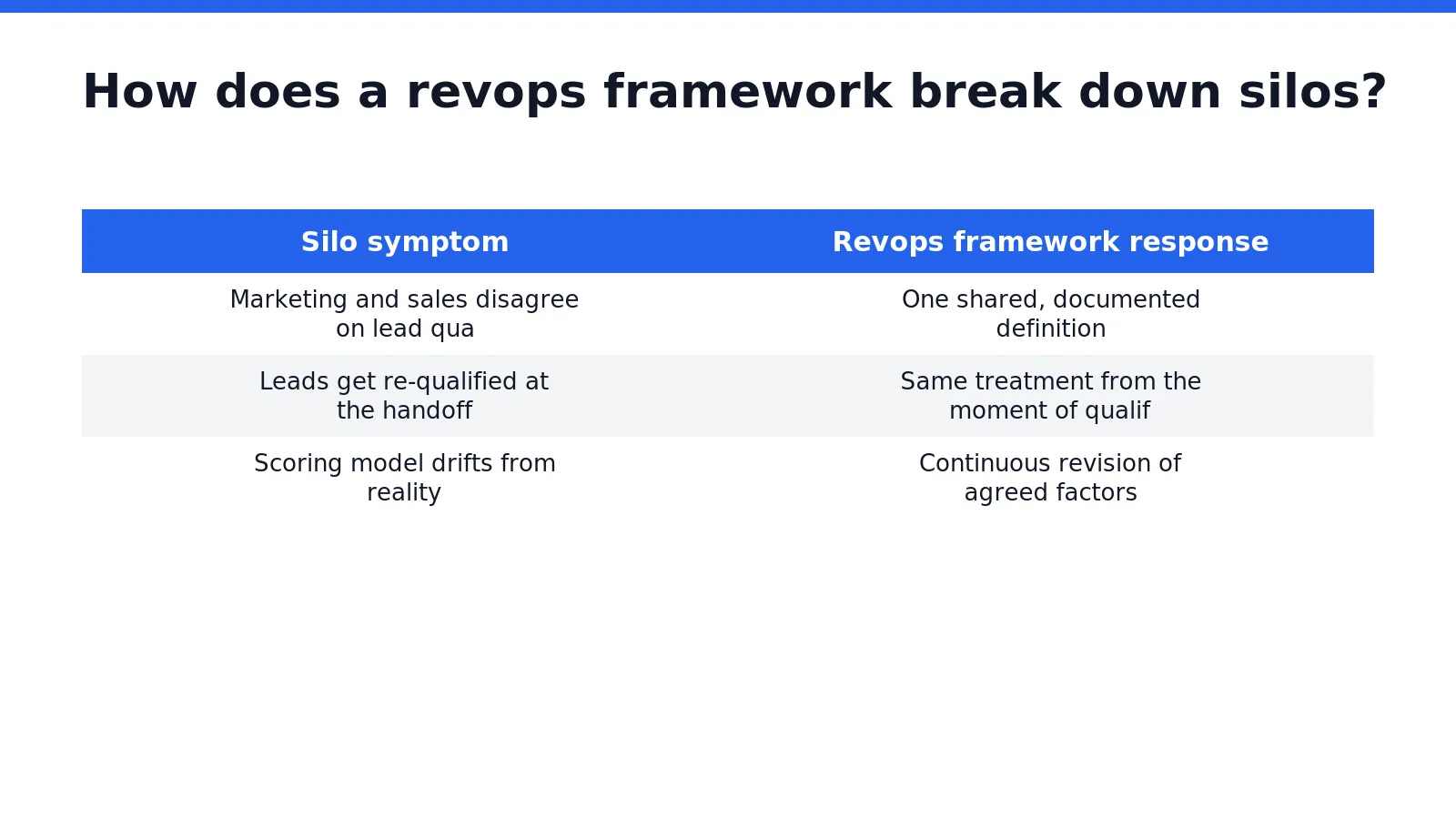
How does a revops framework break down silos?
A revops framework replaces the handoff between marketing and sales with a single, shared revenue process. The first move is forcing both teams to agree on one definition of a qualified lead, which eliminates the classic complaint that marketing delivers volume while sales demands quality.
Without that shared definition, each department keeps its own score. Marketing celebrates form fills; sales dismisses them as unready. The friction is structural, not personal. A revops framework removes the ambiguity by making the qualification criteria explicit and mutually owned.
What does a shared lead definition actually require?
Both teams must agree on the factors that make a lead worth pursuing. Position, title, and the number of touchpoints before a first conversation are common starting points. Once sales and marketing sign off on that shared threshold, they treat qualified leads and opportunities the same way from the moment they qualify. No more re-qualifying at the handoff.
How does the definition stay current?
Teams feed the agreed factors into a lead scoring model and keep revising them as the market shifts. A definition that works this quarter may fail next quarter. The revops framework builds in that revision loop, so the model improves with every cycle instead of going stale.
| Silo symptom | Revops framework response |
|---|---|
| Marketing and sales disagree on lead quality | One shared, documented definition |
| Leads get re-qualified at the handoff | Same treatment from the moment of qualification |
| Scoring model drifts from reality | Continuous revision of agreed factors |
The operational payoff extends beyond the definition itself. A growth os approach automates the business behind the marketing, ensuring every lead is captured, qualified, contacted, nurtured, booked, followed up, tracked, and reported. That sequence removes the gaps where opportunities cool off between form fill and human response.
Marketing sales alignment stops being a quarterly workshop topic. It becomes the default operating state, because both teams work from the same playbook, the same scoring model, and the same definition of revenue-ready. Revenue attribution then becomes possible, because every lead carries the same qualification history into the pipeline. Closed-loop reporting closes the final gap, showing each team how their work contributed to revenue instead of just activity.
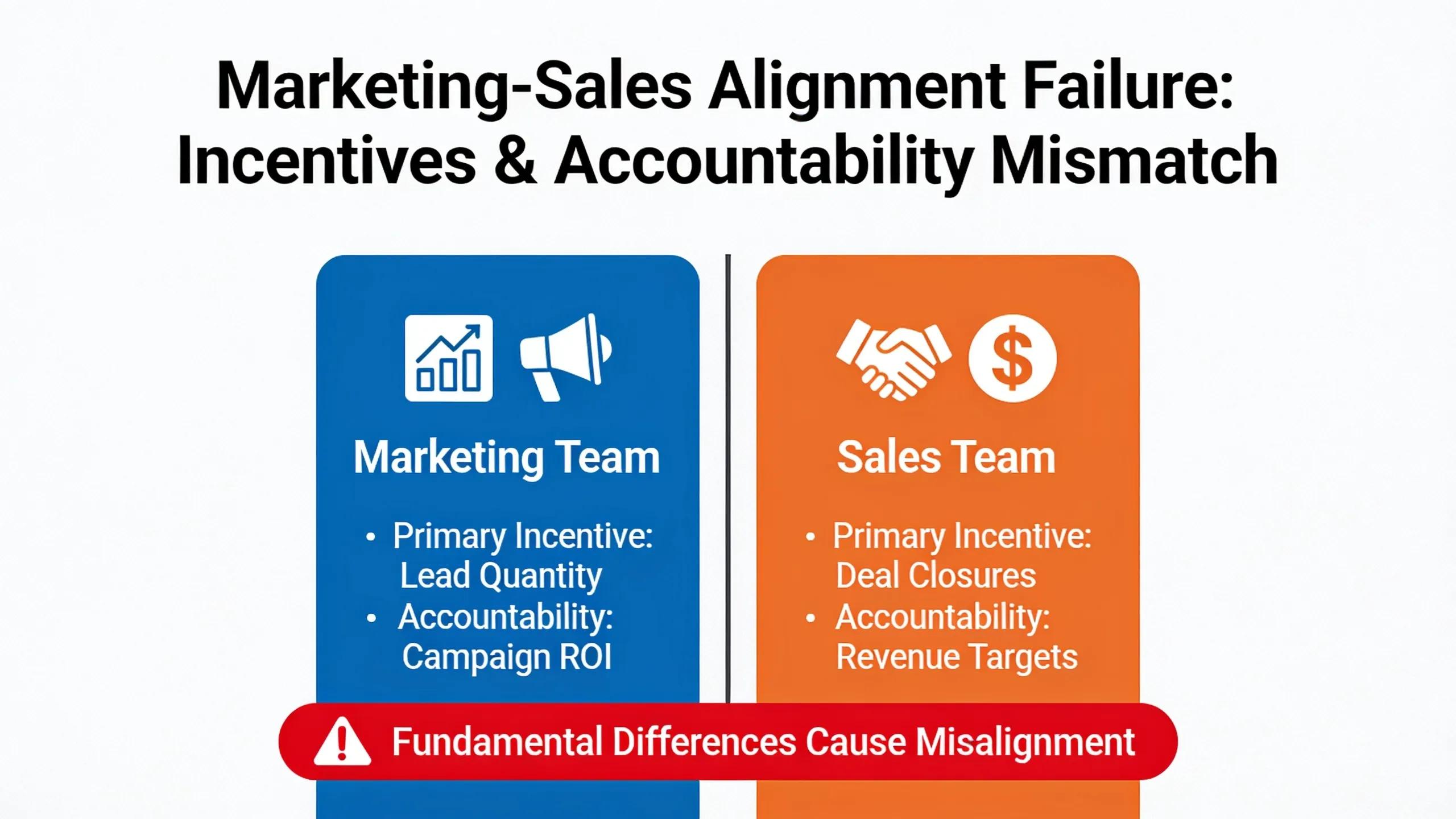
Why is marketing sales alignment so hard to achieve?
Marketing sales alignment fails because the two teams operate under fundamentally different incentives and accountability structures. Many organizations believe they have a sales problem or a marketing problem. They often have a sales and marketing alignment problem. The friction is baked into how each department measures success and what happens when targets slip.
What happens when revenue targets are missed?
When a quarter goes poorly, the VP of Sales turns marketing and their poor quality or low volume of leads into the favorite punching bags. The marketing team fires back. Marketing blames sales when they miss their number because marketing can only bring people through the door. After that, their hands are tied. Neither side owns the full revenue process, so each points at the other.
This cycle repeats because no shared definition of success exists. Marketing measures lead volume and cost per lead. Sales measures closed deals and average deal size. Those metrics pull in opposite directions. Marketing optimizes for quantity. Sales demands quality. Without a revops framework that unifies both sets of metrics under one revenue target, the conflict persists.
Why do separate systems make the problem worse?
Disconnected technology deepens the divide. Marketing runs campaigns in one platform. Sales manages pipelines in another. Neither side sees the full picture. Closed-loop reporting that ties a specific campaign to a closed deal requires data flowing between systems that were never designed to talk to each other. Without that visibility, every handoff becomes a blame point.
The solution is not a new CRM or another meeting. The solution is a growth os that connects search visibility, paid demand, content, CRM, and automation into one operating system. When both teams see the same data, the same attribution, and the same revenue outcomes, alignment stops being a negotiation and starts being a measurement.
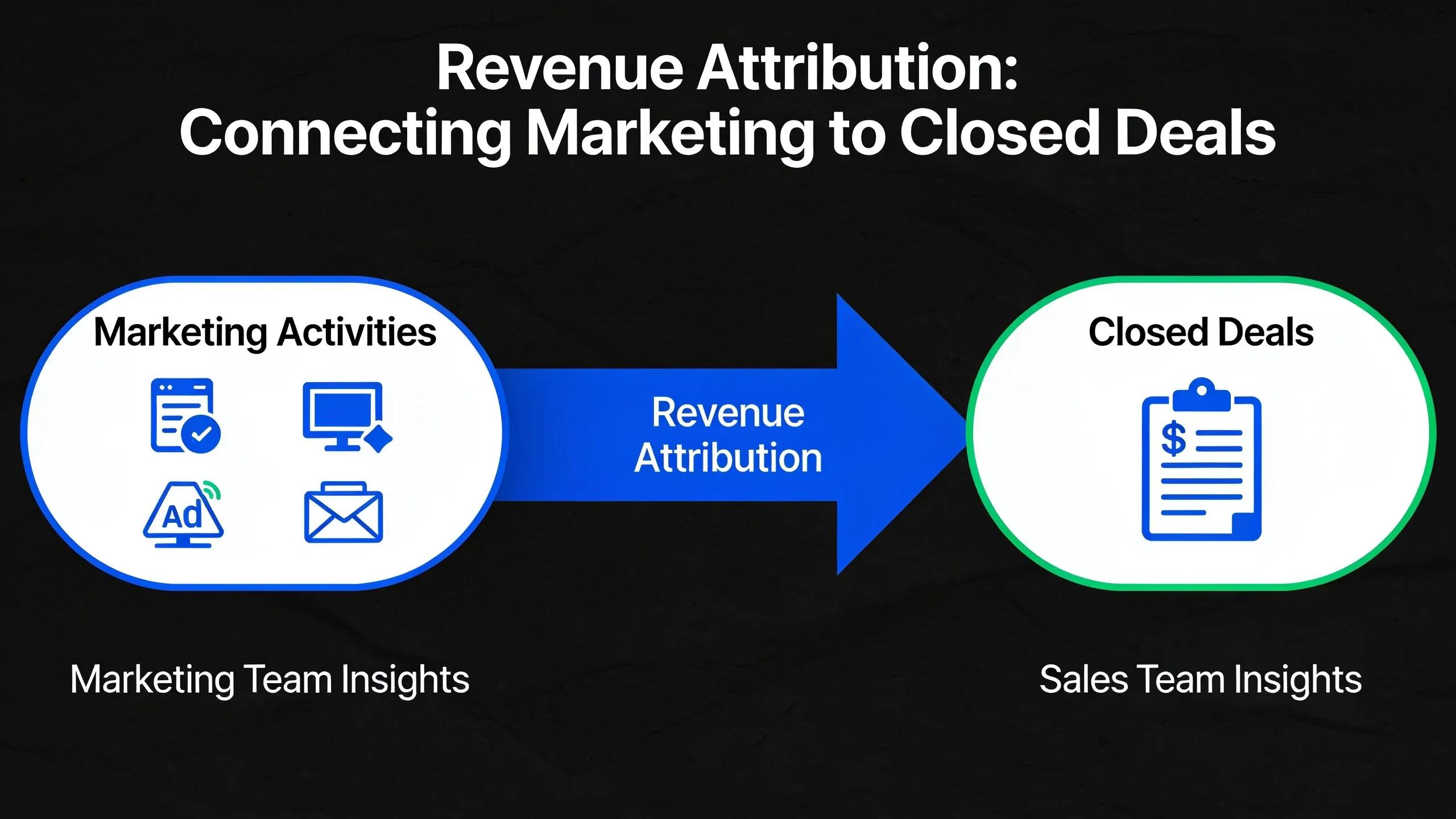
Revenue attribution connects marketing activities directly to closed deals, giving both teams a single source
What role does revenue attribution play in alignment?
Revenue attribution connects marketing activities directly to closed deals, giving both teams a single source of truth for what drives revenue. Without shared attribution, marketing focuses on generating leads while sales focuses on closing opportunities, and these functions often work toward different outcomes. Revenue growth becomes increasingly difficult when teams operate with different goals, separate reporting structures, disconnected technology platforms, and conflicting definitions of success.
How does attribution prevent misaligned incentives?
Attribution eliminates the blame cycle between departments. When marketing can see which campaigns produce actual closed-won revenue rather than just lead volume. Sales can trace which touches influenced a deal, both teams stop arguing over credit. The data replaces opinion. Our revenue attribution system tracks every touchpoint from first search to signed contract, so no activity remains invisible.
What happens without closed-loop attribution?
Without closed-loop reporting, marketing optimizes for the wrong metrics. Teams pour budget into channels that generate high lead counts but low conversion rates. Sales chases opportunities that never materialize. The disconnect compounds monthly. Our Intelligence engine monitors competitor movements, rank drops, site errors, ad waste, and lead attribution in one view. Every lead gets captured, qualified, contacted, nurtured, booked, followed up, tracked, and reported in a closed loop. Attribution turns fragmented activity into a single revenue picture that both teams trust.
How does closed-loop reporting improve revenue operations?

Closed-loop reporting connects marketing activities directly to sales outcomes, showing which campaigns produce revenue. This feedback cycle transforms revenue operations from a guessing game into a measurable system. Without this connection, marketing focuses on generating leads while sales focuses on closing opportunities, and leadership expects predictable revenue growth yet sees neither. A unified sales and marketing strategy starts with a documented playbook that defines roles, responsibilities, and repeatable processes for every stage of the buyer journey.
What metrics does closed-loop reporting track?
Closed-loop reporting tracks the full lifecycle of every opportunity. The system captures which content, ads, or SEO pages initiated the lead. It then follows that lead through qualification, nurture, booking, and close. We ensure that the lead is captured, qualified, contacted, nurtured, booked, followed up, tracked, and reported in a continuous cycle. This creates revenue attribution that ties a paid search campaign directly to a closed deal or identifies which blog post generated the most qualified pipeline.
How does a Growth OS automate closed-loop execution?
A growth os like Bizynk's Growth OS package includes executive reporting that connects marketing performance to business outcomes. Rather than pulling manual reports from five disconnected platforms, the system automatically updates revenue attribution in real time. This enables closed-loop reporting that shows not just what happened, but why it happened and what to fix next.
The operational impact
| Without closed-loop reporting | With closed-loop reporting |
|---|---|
| Marketing blames sales for poor conversion | Shared data shows exactly where leads drop off |
| Sales accuses marketing of low-quality leads | Campaign-level qualification scores visible to both teams |
| Leadership sees conflicting dashboards | Single source of truth for pipeline performance |
| Follow-up happens manually or not at all | Automated nurture sequences triggered by lead behavior |
Revenue operations becomes a feedback engine, not a reporting burden. Marketing sales alignment improves when both teams see the same attribution data and share accountability for the same pipeline numbers. The revops framework closes the loop between spend, activity, outcome, and optimization. Every campaign becomes a learning cycle. Every dollar spent generates intelligence for the next decision.
How to choose the right revops framework for your business?
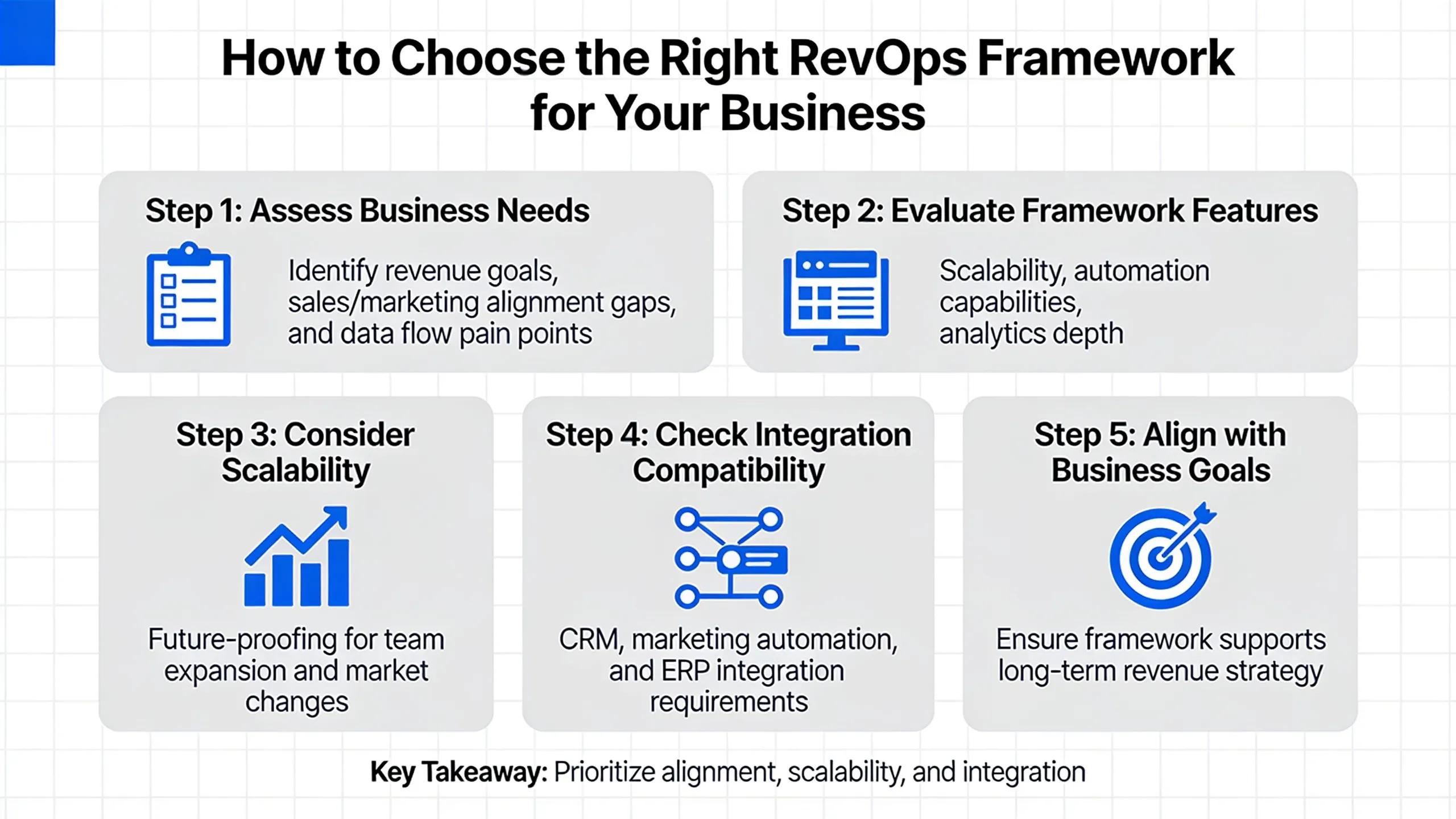
Choosing a revops framework starts with one honest question: does your current process connect marketing activity to closed revenue? Organizations that consistently align sales and marketing see more predictable revenue growth and better resource allocation. The Ultimate Sales & Marketing Alignment Guide to Revenue Growth confirms that fragmented customer experiences, inconsistent pipeline visibility, and slower revenue growth are the direct cost of misalignment. A framework that cannot trace a lead from first touch to signed contract is not a framework at all.
What should a revops framework include?
A buyer-centric framework validates the need for a unified approach that respects buyer autonomy while providing the necessary support. That means the framework must handle three things simultaneously:
- Revenue attribution that connects every campaign, ad, and content piece to pipeline movement
- Closed-loop reporting that feeds conversion data back into campaign optimization automatically
- Marketing sales alignment built on shared definitions of qualified leads and common revenue targets
Without these three components, teams operate on separate data sets and separate timelines. The result is predictable: marketing blames sales for poor follow-up, and sales blames marketing for low-quality leads.
How does automation fit into a revops framework?
Automation is the engine that makes a growth os sustainable. A framework that relies on manual handoffs between departments breaks the moment someone leaves or gets busy. Bizynk's Growth OS package automates lead capture, CRM integration, AI follow-up, booking, review requests, and pipeline workflows. That means a lead arriving at 11:47 PM gets contacted, qualified, and scheduled without a human touching a keyboard. The framework runs whether the team is in the office or not.
The right revops framework eliminates the gap between intention and action. It turns alignment from a quarterly meeting topic into a daily operational reality.
What are the key trade-offs in revenue operations tools?

Most companies still manage search, ads, content, CRM, lead follow-up, reviews, reporting, and business operations through separate vendors and disconnected software. This fragmented approach creates a fundamental trade-off: breadth versus depth. Specialized tools deliver deep functionality in one area but leave gaps between systems where leads cool off, data conflicts, and no single view of performance exists. Unified platforms solve the integration problem but often sacrifice the granular control that specialists provide.
How does the integration-automation trade-off affect daily operations?
The real cost of disconnected tools shows up in daily workflow. A marketing team runs SEO through one dashboard, ads through another, and lead follow-up through a separate CRM. No shared picture of what creates revenue emerges. Bizynk brings these functions together so the systems communicate, monitor performance, and trigger action automatically. The trade-off shifts from managing multiple logins to trusting one system to handle the infrastructure. For teams that prefer hands-on control over every variable, this feels like a loss of visibility. For teams that want marketing to run without constant manual intervention, it removes friction.
What does the Growth OS approach change about vendor selection?
Bizynk's Growth OS package is designed to automate organic growth, making it a hero offer that goes beyond traditional SEO or ad management. The trade-off here involves scope versus specialization. A Growth OS approach means you don't need to understand or manage 15 different marketing systems. Bizynk handles the infrastructure and keeps everything working together. The cost is that you commit to a broader partnership rather than picking best-in-class tools for each function. The gain is closed-loop reporting that connects visibility, demand, and revenue in one view.
| Trade-off | Disconnected Tools | Unified Growth OS |
|---|---|---|
| Setup speed | Fast per tool, slow overall | Slower upfront, faster daily |
| Control depth | High per function | Moderate per function |
| Cross-system data | Manual reconciliation | Automatic sync |
| Lead response time | Hours to days | Minutes to hours |
| Reporting accuracy | Fragmented | Single source of truth |
The decision comes down to whether your team values functional depth more than operational coherence. For most B2B leaders, the hidden cost of disconnected systems, lost leads, delayed responses, conflicting data, outweighs the comfort of specialized tools.
How can Bizynk help you build a growth os?

Building a growth os means connecting every system that drives revenue into one intelligent, automated engine. Bizynk delivers exactly that. We connect search visibility, AI visibility, advertising, content, lead generation, follow-up, reputation, and operational automation into a single growth system. Instead of paying separate companies for SEO, advertising, content, technical optimization, lead automation, and reporting, we bring them together under one roof.
What does the Growth OS package include?
Our Growth OS package includes automated CMS publishing, continuous technical optimization, an AI content engine, lead capture automation, CRM integration, AI follow-up, and executive reporting. The promise is straightforward: your marketing runs, your leads get followed up with, your systems stay connected, and you run your business.
How does this differ from hiring separate vendors?
| With separate vendors | With Bizynk Growth OS |
|---|---|
| Six different logins and dashboards | One unified system |
| No shared data between SEO and ads | Cross-channel revenue attribution |
| Manual lead handoffs that leak revenue | Automated lead capture and AI follow-up |
| Monthly reports that don't connect | Executive reporting with closed-loop insights |
The difference is not just convenience. It is the difference between a fragmented operation and a revops framework that actually works. When your marketing sales alignment is built into the technology itself, you stop losing revenue between systems.
Conclusion

In closing, revenue operations succeeds when marketing, sales, and reporting stop working in isolation and start working as one system. Bizynk connects these functions so that lead data flows seamlessly from capture through follow-up, performance visibility drives real-time optimization, and every team operates from the same truth. When your business runs in sync, growth stops being a hope and becomes a measurable outcome.