CRM Automation: Turning Response Time Into Revenue
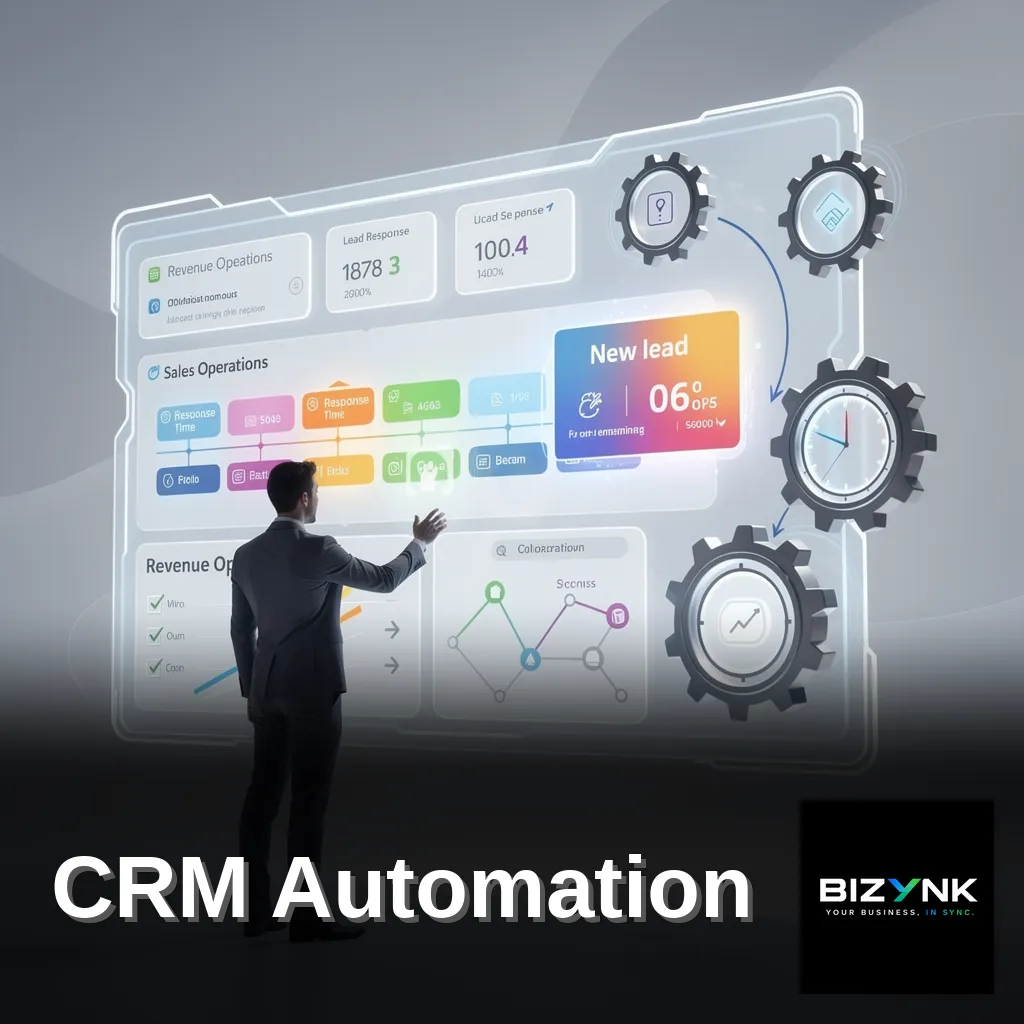
Response speed determines revenue: leads contacted within 5 minutes convert 21x more often than those reached after 30 minutes. The average response time remains a staggering 42 hours. Autonomous CRM automation closes that gap, instantly nurturing every lead. Businesses capture the 78% of customers who buy from whoever responds first.
Key Takeaways
Leads contacted within 5 minutes convert 21x more likely than 30-minute responses, yet most businesses miss this window.
The gap between lead arrival and first response costs more revenue than most marketing and sales strategies combined.
Automation systems that score, nurture, and route leads eliminate the manual delays that kill conversion intent.
Your Business. In Sync. means capturing leads at 11:47 PM and following up before your competitor even knows they exist.
Why does lead response time matter so much?
Lead response time determines whether a prospect becomes a customer or disappears into the void. The data is stark: leads contacted within five minutes are 21 times more likely to convert than those contacted after 30 minutes, according to research compiled in the 43 CRM Lead Response Time Impact Statistics. That same window makes them 100 times more likely to qualify. Yet the average response time remains a staggering 42 hours. The gap between customer expectation and business reality is not a minor inconvenience. It is a revenue leak that most companies never measure.
What percentage of customers buy from the first responder?
Seventy-eight percent of customers purchase from the business that responds first. That single statistic from the same research should reshape how every sales team prioritizes speed. Being second means competing for the a notable share who did not convert on the first touch. Being first means capturing nearly four out of five buyers before they even consider an alternative. Speed to lead is not a nice-to-have metric. It is the single highest-leverage variable in the conversion equation.
How many leads are never contacted at all?
A significant portion of leads are never contacted. More than half of the people who raise their hand and express interest receive zero follow-up. Meanwhile, consumers expect a response within minutes, not hours. The mismatch is catastrophic. Automated lead routing and crm automation close this gap by ensuring every inbound inquiry triggers an immediate, intelligent response. Without automation, the math works against you. With it, the 5-minute window becomes achievable at scale, and the leak gets sealed.

What is speed to lead and why is it critical?
Speed to lead measures the time between a prospect raising their hand, by submitting a form, requesting a demo, or starting a chat, and our team's first meaningful reply. Most sales teams target under five minutes on high-intent inquiries because the odds of reaching and qualifying a lead fall sharply within the first half hour. That narrow window separates a booked conversation from a lost opportunity.
How does response time affect conversion rates?
The automation impact on response time and conversions is direct, measurable, and often transformational. When we delay a reply by even thirty minutes, the probability of meaningful contact drops dramatically. A lead that receives a response within five minutes is far more likely to convert than one contacted an hour later. The gap between expectation and reality is wide: while most consumers expect near-instant acknowledgment, the average business still takes hours to respond.
What makes speed to lead a competitive differentiator?
First responder advantage: the business that replies first captures the conversation
Intent preservation: fast follow-up capitalizes on peak prospect interest
Pipeline acceleration: shorter response cycles compress the sales timeline
Bizynk automates the business behind the marketing, including lead capture, AI follow-up, and booking automation. We build systems that eliminate the gap between a prospect's signal and our team's action. Conversion rate optimization starts not with a better landing page, but with a faster reply. Pipeline velocity depends on removing the friction between inquiry and engagement. Without speed to lead, every other growth investment leaks value into the void between events.
How does automated lead routing improve conversions?
Automated lead routing improves conversions by ensuring the right prospect reaches the right salesperson at the right moment. This eliminates the most expensive gap in any sales operation: the time between a customer expressing interest and a qualified team member responding.
Without routing logic, leads land in a shared inbox or a single salesperson's queue. High-value prospects wait alongside low-intent inquiries. The result is predictable: response times stretch, intent fades, and conversions quietly disappear. Speed to lead collapses when every lead follows the same path.
What makes automated lead routing different from manual assignment?
Manual assignment relies on whoever checks the queue first. Automated lead routing uses scoring and rules to match each prospect with the right resource. A hot inbound demo request routes to a senior closer. A returning customer routes to their account manager. A low-fit inquiry routes to a nurture sequence instead of a sales call.
Top-performing brands build systems that score, nurture, and route those leads automatically. This prevents a flood of unqualified leads from slowing the sales team down. Instead of sorting through noise, salespeople work only the opportunities that match their expertise and capacity.
How does routing connect to pipeline velocity?
Pipeline velocity accelerates when leads skip the queue and land directly on the right desk. Every minute a qualified lead waits is a minute the pipeline stalls. Conversion rate optimization depends on removing those delays. Routing compresses the gap between capture and contact, which directly increases the percentage of leads that convert.
Bizynk's automation engine includes lead capture, CRM integration, AI follow-up, and pipeline workflows. The system routes, scores, and triggers responses without manual intervention. A prospect submits a form at 11:47 PM. The system qualifies the lead, routes it to the correct salesperson, and sends an initial follow-up before morning. By the time the team arrives, the lead is warm and waiting.
What does CRM automation actually remove from your day?
Answering the same questions, sending the same follow-ups, and trying to remember which lead already got a callback. Those three tasks consume more sales hours than most leaders realize. CRM automation removes exactly that repetitive work, replacing memory and manual effort with a system that tracks every touchpoint. Instead of relying on scattered notes, our clients get a single source of truth that never forgets a conversation.
The real win is speed to lead. When a prospect submits a form, the clock starts ticking. Manual processes introduce delays, and those delays cost revenue. CRM automation compresses the gap between inquiry and action, ensuring no lead sits idle while your team focuses elsewhere.
What does automated lead routing change about your follow-up?
Automated lead routing eliminates the guesswork of who handles which prospect. The system assigns each lead based on your rules, so the right person gets the right conversation immediately. This directly improves lead response time, which remains the single most controllable factor in whether a deal moves forward. A lead contacted quickly is more likely to engage, and engagement drives pipeline velocity.
Here is what drops off your plate:
Manual lead assignment and transfer between reps
Chasing down status updates on active conversations
Building follow-up sequences from scratch every time
Logging every call, email, and note into the CRM
How does this connect to conversion rate optimization?
Faster response feeds conversion rate optimization directly. When follow-up happens in minutes instead of hours, prospects stay warm and intent stays high. CRM automation also powers pipeline velocity by keeping every deal moving through the funnel without stalls. The system handles the routine touches, so your team only steps in for conversations that need a human. That is the difference between a busy sales operation and a productive one.
How does conversion rate optimization connect to response time?
Conversion rate optimization and lead response time share a direct, measurable relationship. When someone fills out a form or calls a business, they sit at their highest point of intent. The time between that customer reaching out and the business responding is where intent fades and conversions quietly disappear. Fast response times correlate with higher close rates, better customer satisfaction, and overall pipeline efficiency across industries.
What happens to intent during the response gap?
Intent decays rapidly after the initial contact moment. A prospect who submits a form at 2:00 PM. Receives no reply until 10:00 AM the next day has already moved on mentally. They may have contacted a competitor, resumed their search, or simply lost confidence. The gap between outreach and response acts as a conversion leak that most businesses never measure directly. Every hour of delay erodes the urgency that drove the original action.
How does automation close the response gap?
Our Growth OS package includes conversion rate optimization as a core component alongside landing-page optimization and lead capture automation. These elements work together to compress the response window from hours to seconds. When a form submission triggers an immediate automated reply, the prospect stays engaged. The system captures the lead, qualifies it, and routes it to the right person without manual intervention. This eliminates the gap where conversions disappear and turns response speed into a competitive advantage.
What is pipeline velocity and how does automation accelerate it?
Pipeline velocity measures how quickly leads move through the sales stages from capture to close. A slow pipeline bleeds revenue. Every hour a qualified prospect sits uncontacted, the probability of conversion drops. Automation accelerates this by removing the bottlenecks that stall deal progression: manual lead assignment, delayed follow-up, and inconsistent nurturing.
How does CRM automation directly impact pipeline speed?
CRM automation eliminates the gap between lead capture and action. Businesses using CRM are 86% more likely to exceed sales goals and see 21-30% revenue increases, according to industry statistics on CRM lead response time impact. Instead of relying on memory or manual effort for every single lead, automation quietly handles the repetitive parts. That means no lead falls through the cracks because someone forgot to make a call.
What does an automated lead journey look like in practice?

We build systems that handle the entire lead journey automatically:
Captured from form, chat, or call
Qualified against your ideal customer profile
Contacted within minutes, not hours
Nurtured with relevant follow-up sequences
Booked into your calendar without back-and-forth
Tracked through every pipeline stage
Reported so you see velocity changes in real time
This is where speed to lead becomes a competitive weapon. Leads contacted within 5 minutes are 21x more likely to convert compared to 30-minute follow-ups. The average response time across industries remains a staggering 42 hours. Automated lead routing closes that gap by sending each prospect to the right person instantly, not when someone checks their inbox. The result is measurable conversion rate optimization driven by timing, not just messaging.
How to choose the right CRM automation approach?
Choosing the right CRM automation approach requires evaluating whether your current systems communicate with each other or operate in isolation. Most companies manage search, ads, content, CRM, and operations through separate vendors, creating gaps where leads fall through and opportunities vanish. The right approach connects those functions so systems trigger action automatically, not just store data.
What separates basic automation from integrated automation?
Basic CRM automation handles one task at a time: sending a welcome email or assigning a lead to a rep. Integrated automation connects every stage of the growth cycle. When a prospect submits a form, the system captures the lead, qualifies it, routes it to the right person, schedules a follow-up, and tracks the outcome. That is the difference between a tool and an operating system.
How do you evaluate whether a vendor can deliver integration?
Look for evidence that the provider connects search visibility, paid media, content, and CRM into a single workflow. Bizynk's Growth OS package, for example, includes CRM integration, AI follow-up, booking automation, and pipeline workflows as a unified system. The differentiator is integration plus automation plus action, not just software access.
Evaluation criterion | Standalone CRM tool | Integrated growth system |
|---|---|---|
Lead capture | Manual entry or basic form | Auto-capture from search, ads, content |
Follow-up | Scheduled email only | AI-driven, multi-channel, time-sensitive |
Pipeline visibility | Siloed in CRM | Connected to marketing performance |
Accountability | Vendor blames software | Provider owns outcomes |
The right approach delivers business outcomes plus implementation, strategy, automation, and human accountability. Speed to lead depends on this integration. Without it, lead response time stretches from minutes to hours, and conversion rate optimization becomes guesswork. Automated lead routing and pipeline velocity improve only when the CRM automation approach treats marketing. Sales as one system, not two departments.
Why choose Bizynk for CRM automation and growth?
Most growth systems operate in silos. Search visibility lives in one tool, advertising in another, and lead follow-up in a third. Bizynk connects search visibility, AI visibility, advertising, content, lead generation, follow-up, reputation, and operational automation into one intelligent growth system. Instead of paying separate companies for SEO, advertising, content, technical optimization, lead automation, and reporting, Bizynk brings them together under a single accountable operating system.
What makes Bizynk different from a traditional CRM provider?
Traditional CRM software captures data. Bizynk acts on it. We continuously monitor your digital presence, identify opportunities and problems, and deploy approved optimizations even when you are not working. A lead arrives at 11:47 PM. Bizynk follows up. A ranking drops. Bizynk fixes it. The brand promise is straightforward: your marketing runs, your leads get followed up with, your systems stay connected, and you run your business.
The core difference comes down to architecture:
Traditional CRM: Manual data entry, separate marketing tools, reactive follow-up, disconnected reporting
Bizynk: Automated lead capture, integrated search and ad platforms, autonomous follow-up, unified pipeline visibility
Bizynk is positioned as a managed growth operating system, not an SEO software reseller. We do not hand you another dashboard to manage. We build the system that manages the work.
How does Bizynk improve lead response time?
Speed to lead determines whether a prospect converts or disappears. Research shows leads contacted within five minutes are 21 times more likely to convert compared to 30-minute follow-ups, yet the average response time across US companies sits at 42 hours. Bizynk eliminates that gap through automated lead routing and instant notification workflows. When a prospect fills out a form, starts a chat, or calls your business, the system captures, qualifies, and routes that lead to the right person or automated sequence within seconds. No manual triage. No missed windows.
Conversion rate optimization improves naturally when response time drops from hours to seconds. Pipeline velocity accelerates because every stage of the buyer journey gets automated handoffs. The result is a growth system that does not wait for you to notice something went wrong. By morning, it is handled.
Conclusion
In closing, the businesses that win in today's market aren't the ones managing response time as a separate problem, they're the ones who've woven it into their entire growth system. When lead capture, qualification, follow-up, and conversion operate as a synchronized whole rather than disconnected steps, response time stops being a metric and becomes a competitive advantage. Your business stays in motion. Your revenue compounds. Your team focuses on strategy instead of firefighting. That's what happens when your systems are finally in sync.